Perfect Painting Brushes

Sofia Alvarez
| 24-08-2026
 · Lifestyle Team
Choosing the right brushes can make painting more controlled, efficient, and enjoyable.
You do not need a large collection to achieve professional results; a carefully selected group of versatile brushes can cover most techniques.
The ideal set depends on your medium and subject, but understanding brush shapes, sizes, and functions makes it easier to build a practical collection.
How Many Brushes Do You Need?
For most beginners, 6 to 8 good-quality brushes are enough to create a wide variety of paintings. Instead of buying a large set with many similar sizes, choose brushes that serve different purposes.
A practical starter collection includes:
- 2 round brushes — small and medium sizes for details, lines, leaves, and controlled shapes
- 2 large round brushes — for washes, larger forms, and broader applications
- 1 flat brush — for backgrounds, broad strokes, and clean edges
- 1 filbert brush — for soft, rounded shapes and natural textures
- 1 detail brush — for fine lines and small finishing touches
- 1 angled or specialty brush — optional for controlled edges and distinctive marks
This selection provides enough variety without overcrowding your workspace.
Round Brushes for Versatile Painting
Round brushes are among the most useful brushes for both beginners and experienced painters. Their pointed tips can create fine lines, while the fuller body can hold enough paint for broader strokes.
A small round brush is useful for delicate details, thin branches, small leaves, and fine accents. A medium round brush works well for general painting, while a large round brush can handle larger shapes and washes.
If you want to keep your collection small, round brushes should be among your first choices because of their versatility.
Flat Brushes for Broad Areas
Flat brushes have a straight edge and a rectangular shape, making them particularly useful for covering larger areas efficiently.
A medium flat brush can handle backgrounds, skies, broad foliage, and larger shapes. Its straight edge can also create clean lines and defined boundaries.
A larger flat brush can be useful for substantial washes, while a smaller flat brush provides greater control for medium-sized areas. For a compact collection, one medium flat brush is usually enough to start.
Filbert Brushes for Soft Shapes
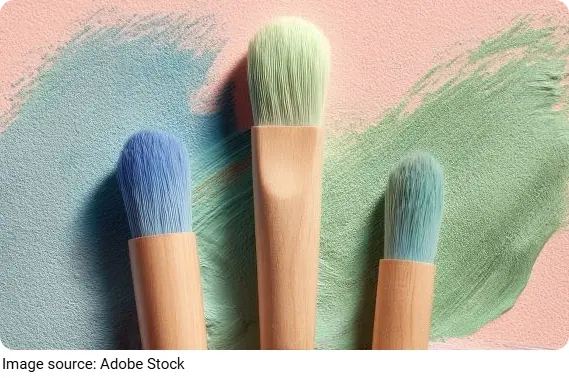
Filbert brushes combine characteristics of round and flat brushes. Their rounded ends create softer edges than a traditional flat brush, making them useful for organic forms.
They work particularly well for foliage, clouds, petals, rounded objects, and soft transitions. A medium filbert is a practical choice because it can create both relatively broad marks and smaller curved strokes.
You generally do not need several filberts when starting. One well-made medium filbert can add useful variety to a basic brush collection.
Detail Brushes for Fine Work
Detail brushes are designed for precise marks and small areas. They are useful when you need thin lines, tiny accents, delicate branches, or other fine elements.
A small detail brush is usually sufficient for a starter collection. Extremely small brushes can be helpful for specialized work, but they are not essential for most paintings.
When choosing a detail brush, look for one that forms a clean point and maintains its shape during use.
Choosing the Right Brush Size
Brush sizes are not completely standardized between manufacturers, so the same number can represent slightly different dimensions. For this reason, it is better to consider the actual brush shape and width rather than relying only on the number printed on the handle.
A useful basic range is:
- Small: fine details and narrow marks
- Medium: general painting and moderate-sized shapes
- Large: washes, backgrounds, and broad applications
For most painters, having three practical size ranges is more useful than owning many brushes with only minor differences in size.
Natural or Synthetic Brushes?
The best bristle type depends on the painting medium and the effect you want.
Natural-hair brushes can hold substantial amounts of fluid and are valued for their ability to carry paint and water. Synthetic brushes can provide good spring, shape retention, and durability and are available for a wide range of painting techniques.
For beginners, a combination of suitable synthetic and natural-hair brushes can provide useful flexibility, although a completely synthetic collection can also be an effective starting point.
A Professional 8-Brush Collection
If you want a simple but capable collection, start with these 8 brushes:
1. Small round — fine details and thin lines
2. Medium round — general painting
3. Large round — washes and larger shapes
4. Extra-large round — broad applications and substantial washes
5. Medium flat — backgrounds and defined edges
6. Small flat — controlled blocks of color and smaller shapes
7. Medium filbert — soft organic forms
8. Small detail brush — precise finishing work
This collection covers a broad range of marks without requiring dozens of brushes.
How to Care for Your Brushes
Good brush care is just as important as selecting the right brushes. Clean them thoroughly after each painting session and remove pigment before it dries in the bristles.
Avoid leaving brushes submerged in water for extended periods. Once clean, allow them to dry properly and store them in a way that protects their tips and maintains their original shape.
Keep brushes separated when possible so their bristles do not become bent or compressed during storage.
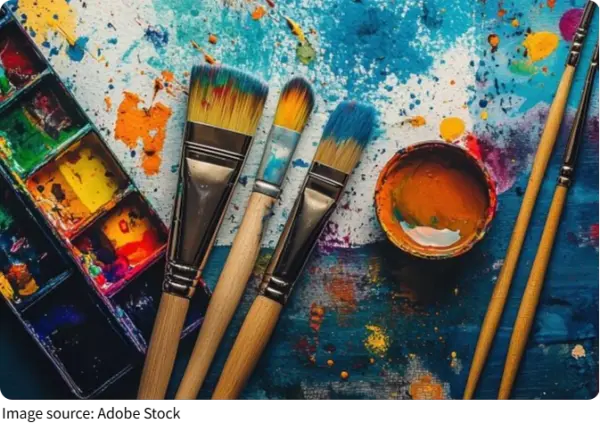
You do not need a huge brush collection to paint effectively. Six to eight carefully selected brushes can provide an excellent foundation, with round, flat, filbert, and detail brushes covering most everyday techniques. As your skills develop, add specialized brushes only when a particular technique or style genuinely requires them.
The goal is not to own the most brushes, but to have the right brushes for the marks you want to create.