The Giant Dog Lean

Arvind Singh
| 27-05-2026
 · Animal Team
Hey friends! Have you ever been in the kitchen minding your own business when a giant fluffy companion casually strolls over and leans right into your side like it is the most normal thing in the world? If you live with a Bernese Mountain Dog, this little habit probably feels very familiar.
Their size alone makes the moment impossible to ignore, which often leaves owners wondering what the behavior actually means. Is it affection, comfort, attention-seeking, or something deeper? More often than not, that gentle, full-body lean is a quiet way of staying close to someone they trust most.
A Working Dog Built for Closeness
The Bernese Mountain Dog, often called a Berner, developed in the Swiss Alps as a dependable farm worker. For centuries, these powerful dogs helped pull dairy carts, guide livestock, and remain close to farming families in harsh mountain conditions. Their role demanded strength, patience, and trustworthiness.
Unlike breeds selected mainly for independent guarding or hunting, Berners were expected to cooperate closely with people throughout daily routines. That history matters when understanding their behavior today. A dog bred to work beside humans often seeks physical closeness naturally.
This helps explain why many Berners seem determined to stay nearby. Owners frequently notice them squeezing into narrow hallways, resting near feet, or positioning themselves close during quiet moments at home. Leaning is often part of this attachment rather than a random habit.

What Leaning Usually Means
When a Bernese Mountain Dog presses his shoulder or body against someone, the explanation is often simple: connection. Physical contact serves as reassurance for many dogs. Berners, known for their emotionally sensitive nature, tend to seek comfort through proximity. Leaning can function like a silent form of communication, almost as if the dog is saying, “I feel safe here,” or “Stay close.”
Behavior specialists commonly associate this action with social bonding. Dogs are highly social animals that rely on relationships for security. A Berner that leans into an owner after a walk, during relaxation, or in unfamiliar settings may simply be seeking reassurance from a trusted person.
Their large frame also changes how the behavior feels. A toy-sized dog climbing into a lap seems cute and manageable, while a 100-pound Berner leaning heavily into someone becomes unforgettable. The emotional message, however, is often the same: comfort through contact.
Is It Ever About Dominance?
Some dog owners worry that leaning signals an attempt to control the household. In certain confident or territorial breeds, invading personal space may occasionally accompany pushy behavior. Yet applying that assumption to every dog can be misleading.
Bernese Mountain Dogs generally display a cooperative and soft-tempered personality. They are more widely recognized for sensitivity than confrontation. A Berner leaning calmly while seeking closeness differs greatly from a dog displaying tension, resource guarding, stiff posture, or aggressive body language.
If a dog leans while relaxed, with loose muscles and calm eyes, affection or reassurance is the more credible explanation. On the other hand, if leaning appears alongside possessiveness, blocking movement, growling, or refusal to respond to cues, guidance from a professional trainer or veterinary behaviorist may help clarify what is happening. In most homes, though, the classic Berner lean reflects emotional closeness rather than social competition.
Why Berners Crave Human Contact
The breed’s personality offers another clue. Bernese Mountain Dogs are widely known for loyalty and emotional responsiveness. Many become deeply attached to household routines and often follow family members from room to room. Because of this strong attachment, separation or unfamiliar environments may trigger uncertainty. A lean against your side during a crowded gathering or veterinary visit can become a form of emotional grounding.
There may also be a comfort component. Gentle pressure and touch can feel calming to social mammals, including dogs. While researchers continue studying canine emotional responses, many behavior experts believe close physical interaction reinforces positive feelings between dogs and trusted people. In practical terms, your Berner may simply enjoy being near the person who represents safety, routine, food, attention, and companionship.
When Leaning Becomes Too Much
Affection becomes less charming when a giant dog nearly sends someone stumbling backward. Homes with children, older family members, or visitors may need clear boundaries around this behavior. Training does not mean punishing the dog for showing affection. Instead, it focuses on teaching a safer, gentler way to seek attention.
A useful approach involves redirecting the moment. Before your dog presses in, ask for a calm sit beside you. Offer praise, attention, or petting only after the dog settles politely. Over time, the Berner learns that closeness remains welcome, but balance and manners matter too.
Harsh correction rarely works well with this breed. Berners tend to respond better to patience, consistency, encouragement, and calm repetition. Sensitive dogs can become confused or anxious when handled too firmly. Consistency matters more than intensity. If leaning is discouraged one day but rewarded the next, confusion often follows.
Living With the Famous “Berner Lean”
One practical truth deserves mention: leaning usually comes with fur. Bernese Mountain Dogs carry a thick double coat designed for colder climates, and shedding can be substantial.
Regular brushing helps reduce loose hair and keeps the coat healthier, though few owners completely escape finding fur on clothes after an affectionate encounter. Still, many families come to accept the habit as part of life with the breed. For them, the sudden weight against a leg becomes a familiar expression of companionship.
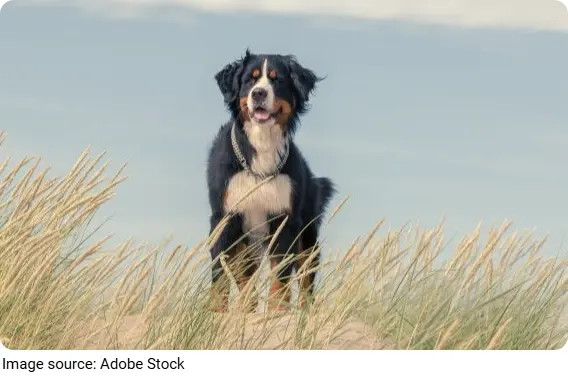
Next time a Bernese Mountain Dog quietly leans against you, don’t rush to step away. It might look like a small habit, but often it is their quiet way of showing comfort and trust. Some of the best moments with these gentle giants happen in the simplest, quietest ways.